
Teaching civics so students learn to act as citizens
What does civics and citizenship cover in Australian schools, and how can teachers handle contested topics, real student decisions, local links and assessment calmly? This article gives practical answers that suit a classroom, a staffroom and a school council meeting.
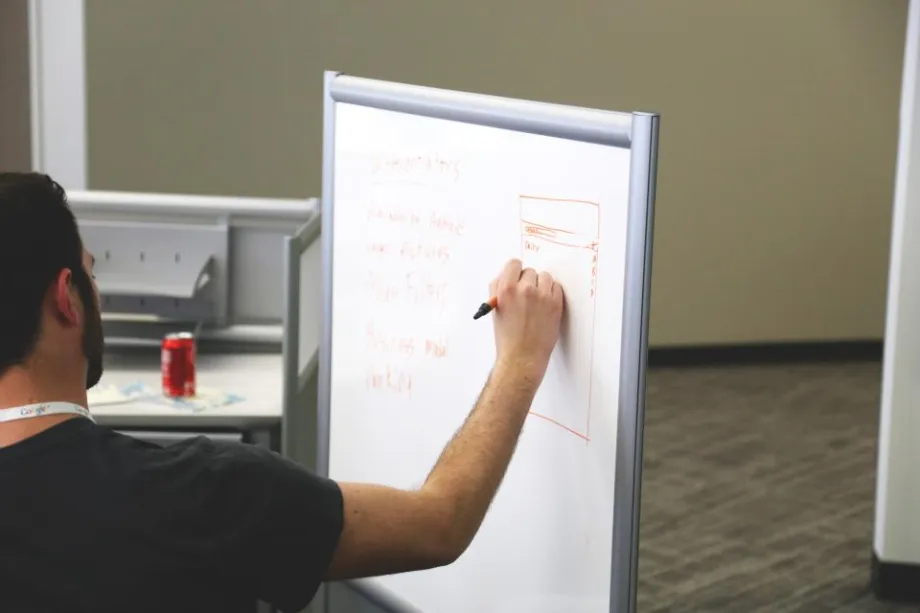
A Year 5 class votes on whether the class pet should be a guinea pig or a pair of stick insects. They argue, count hands, and then discover that the teacher has already ruled out the guinea pig because of allergies. That small moment is a civics lesson. Who gets to decide, who is affected, and what makes a decision fair are the questions underneath most of the content in this learning area.
What civics and citizenship covers
In the Australian Curriculum, civics and citizenship sits within the humanities and social sciences and is taught explicitly from the middle primary years through to Year 10. Senior secondary offerings vary by state and territory, and each education department sets its own timetable expectations.
In general terms the content falls into three groups. The first is government and democracy: how Australia's system works, what the different levels of government do, and how people take part through voting and other means. The second is laws and citizens: why rules exist, how laws are made, and how courts and rights fit in. The third is identity and diversity: what it means to belong to a community or nation, and how people with different backgrounds and beliefs live together.
Alongside the content sit skills. Students learn to ask questions, find and judge sources, compare viewpoints and explain their thinking. Those skills overlap with the general capabilities, especially ethical and intercultural understanding, so civics rarely needs to be an isolated unit. It can live in English, history, media studies and school life.
Teaching contested issues calmly
Some topics divide families and communities, and students know it. Pretending otherwise makes the classroom less trustworthy. Good practice is to name the topic, say why it is worth studying, and set out how the discussion will run.
Agree the rules before the topic arrives
Ground rules work best when students help write them and they are set early in the term, well before a heated moment. Typical examples: speak about ideas, not about people; give a reason with every claim; summarise the previous speaker before disagreeing. Return to these rules when a discussion warms up, rather than inventing new ones on the spot.
Sort the question before answering it
Many arguments go nowhere because three kinds of question are tangled together. Some questions are factual and can be checked, such as what a law says or what a council decided. Some are about values, such as how to weigh fairness against freedom. Some are about predictions, such as what might happen if a policy changed. Teaching students to label which kind they are facing slows things down in a useful way. Facts get checked, values get explained, and predictions get treated with caution.
Decide your own role
Teachers can act as a neutral chair, as a devil's advocate who argues the side nobody has taken, or as a questioner who keeps asking for reasons. Each is defensible. What matters is that students know which role you are playing and that you play it evenly across different positions. Many schools and departments have guidance on handling political topics, and it is worth reading before a unit starts, so that staff and parents hear the same message.
Some students will hold views that others find hurtful or that touch their own lives closely. A short private word before the lesson, or an alternative way to take part, protects them without removing the topic.
Student participation as practice for democracy
Students learn what a democracy feels like by taking part in something that works like one. A student representative council, regular class meetings and student input into school projects all count, but only when they lead to actual decisions.
The test is simple. Can a student point to something that changed because of what they or their class said? It might be a new rule for the oval, a redesigned library corner or the way a school assembly runs. A council that only collects suggestions, and never reports back, teaches cynicism rather than citizenship.
A useful pattern for any participation project has five parts: students consult their peers, make or shape a decision, carry out a plan, and then report on how it went. The last step is the one most often skipped. Being accountable for outcomes, including disappointing ones, is part of what makes the experience civic rather than decorative.
Limits should be stated openly. Safety, budget processes, staffing and departmental policy are not up for a class vote, and saying so at the start avoids false promises. Inside those limits, real choices are possible, and they are best kept manageable. A project that can finish in a term teaches more than an ambitious one that stalls.
Participation also needs to include students who do not put their hands up. Rotating roles, small group consultation before a whole class vote, and anonymous ways to contribute all widen the circle. In primary school this might be a class meeting with a rotating chair. In secondary school it might be a year level forum with a staff member who is there to listen rather than to manage.
Links with councils and communities
Local government is the level most students can actually see: parks, libraries, footpaths, pools and rubbish collection. It is often the easiest way into the abstract idea of government.
Councils frequently publish meeting agendas and minutes, and many have staff or elected members who visit schools. A class might follow one local issue over several weeks, read the public papers, interview someone involved and then write a letter or submission of their own. Even if nothing changes, students learn how decisions are actually made and who has to be convinced.
Other local organisations add to the picture. Community groups, local historical societies, service clubs, volunteer emergency services and electoral officials can all show what civic life looks like outside Canberra and state parliaments. Schools that involve First Nations community members should approach this respectfully, through agreed protocols and with clear purposes, rather than as a one-off visit.
Teachers can keep these links manageable by choosing one or two partners a year and building a unit around them. A visit works best when students prepare their questions in advance and have a task to complete afterwards.
Assessing understanding without turning it into politics
Assessment in this area is fairest when it measures thinking, not conclusions. A student who argues for a lower voting age and a student who argues against it can both show excellent reasoning, so criteria should reflect that.
Useful features to assess include accuracy of knowledge about institutions and processes, use of reliable sources, the ability to present more than one perspective fairly, and clarity of explanation. Tasks might include a briefing note for a fictional council, a comparison of how two sources report the same event, or a reflection on a participation project that explains what the student did, what happened and what they would change.
Teachers can protect fairness by sharing criteria with students beforehand, using anonymous samples when marking, and moderating with colleagues who hold different views. Written comments should address the quality of the argument and avoid agreeing or disagreeing with the position taken. When reporting to families, describing what a student can explain and do is clearer than any hint of where they stand on an issue.
Participation can be assessed too, though with care. Looking at a student's contribution to a group project, including how they consulted others and handled disagreement, gives evidence of civic skills without grading enthusiasm or personality.
Where to start
A school does not need a new program. It can begin by checking where civics already appears in its units, asking whether the student council makes any real decisions, choosing one local issue to study, and agreeing a shared approach to contested topics across year levels. Small, well-run steps build habits that students recognise as fair, and fairness is what they will carry into adult civic life.
Frequently asked questions
What does civics and citizenship cover in the Australian Curriculum?
In general terms it covers how government and democracy work, how laws are made and applied, and what it means to belong to a diverse society. It also builds skills such as asking good questions, weighing sources and explaining a point of view. States and territories shape how it is timetabled and taught.
Should teachers share their own political views?
Most schools ask teachers to keep their own party preferences out of the classroom. The aim is to help students reason about an issue, not to steer them to a conclusion. A teacher can still explain how they weigh evidence without saying how they vote.
How can a school give students a real say without losing control?
Decide in advance which questions are open to students and say so plainly. Give them genuine choices inside those limits, and report back on what happened to their proposals. Students accept limits far more readily than silence.
How do you assess civics without marking opinions?
Assess the quality of the reasoning, the use of evidence and the accuracy of the knowledge. A student can reach any reasonable conclusion and still earn full marks. Criteria written around these features keep the task fair and easier to moderate.
Related articles

Student voice: putting learning in students' hands
What does student voice look like beyond a survey, and how can schools build it in a way students can trust? This article covers co-constructing units, student-led confer…

Learning stations that make end of unit revision active
Station rotations can turn the last week of a unit into focused practice instead of a re-read of the notes. This article covers how to design the stations, run the timing…
Teaching literacy well in disadvantaged communities
What helps children learn to read and write when school and home seem far apart? This article looks at six practical ideas: building on home knowledge, high expectations …